Last Update:
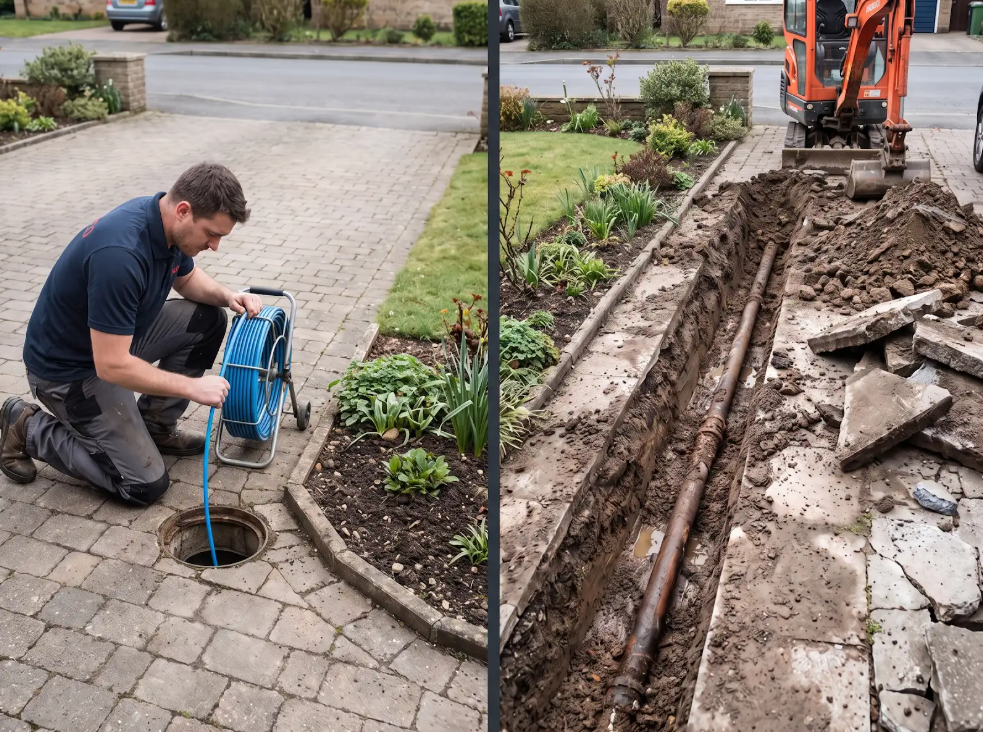
If you've been told your sewer or drain pipe is damaged, there are usually two paths forward: relining it from the inside, or digging it up and replacing it. The cost difference between the two is significant, and it's worth understanding before you agree to either.
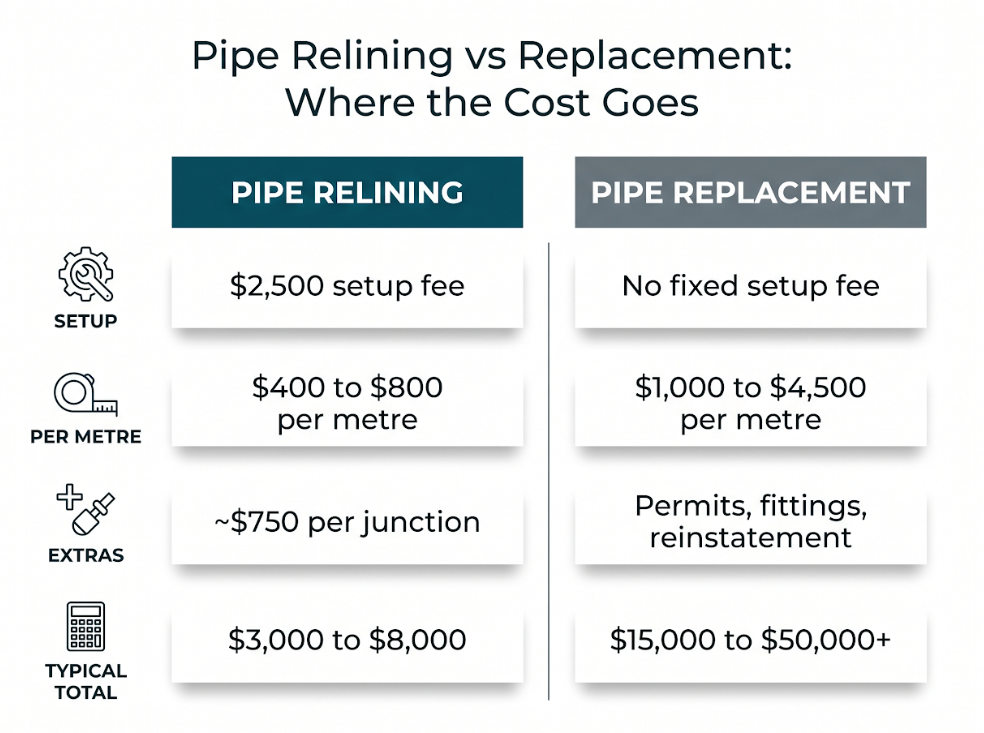
Here's the short answer. Pipe relining in Sydney typically costs $400 to $800 per metre, plus a setup fee of around $2,500 and roughly $750 per junction reinstated, putting most residential jobs somewhere between $3,000 and $8,000. Traditional excavation and replacement, once you count digging, reinstating what's above the pipe, and permits, typically totals $15,000 to $50,000 or more. Relining is commonly 30 to 75 percent cheaper overall. That said, replacement is sometimes genuinely the only option. Here's how each works, what drives the cost, and how to know which one you actually need.
What each approach actually involves
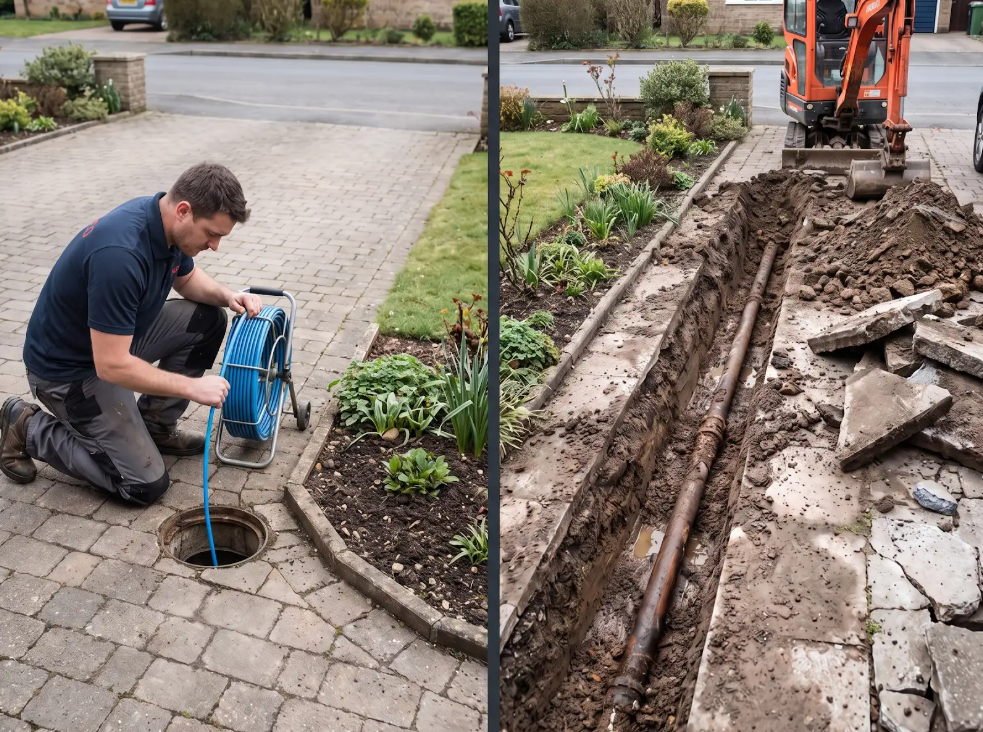
Pipe relining repairs a damaged pipe from the inside, without digging it up. A resin-saturated liner is inserted through an existing access point, inflated against the walls of the old pipe, and cured until it hardens into a new, seamless pipe within the original one. We've explained the full process in more detail in our guide to what is pipe relining is and how the relining process actually works, if you'd like the technical detail.
Pipe replacement is the traditional approach: excavating down to the damaged section, removing the old pipe, and installing a new one, before reinstating whatever sat above it, driveway, garden, tiles, or concrete.
Both approaches fix the underlying problem. The real differences are cost, disruption, and how much of your property gets dug up along the way.
What pipe relining costs
Relining is typically priced across three components, which is why a single "per metre" figure can be misleading without the rest of the picture. A setup or mobilisation fee of around $2,500 covers site preparation and equipment, and applies regardless of the pipe's length, which is why short relines can cost more per metre than long ones. A per-metre rate of roughly $400 to $800 covers the liner material and installation. And a charge of around $750 per junction applies for every branch connection along the pipe that needs to be reopened and resealed after the liner goes in.
Put together, a typical 5 to 15 metre residential sewer reline generally lands somewhere between $3,000 and $8,000, depending on length and how many junctions are involved. Longer or more complex lines can run higher.
What pipe replacement costs
Replacement pricing looks simpler at first, a per-metre digging rate, but the real cost lives in everything that comes after the trench is dug.
Excavation and pipe installation alone typically runs $1,000 to $4,500 per metre in Sydney, and if the pipe sits under a driveway, garden bed or foundation, add another $500 to $2,000 for the extra work involved in reaching it. On top of that, most replacement jobs also carry council permit costs ($100 to $1,000, depending on your area), new fittings, valves and seals ($100 to $500), and, often the largest add-on of all, reinstating whatever was above the pipe: re-concreting a driveway, re-tiling a patio, or rebuilding a garden bed. These reinstatement costs are frequently what pushes a total replacement bill well beyond the pipe work itself.
Once everything is counted, a full sewer line replacement in Sydney commonly totals $15,000 to $50,000 or more, depending on depth, access, length, and how much needs to be rebuilt above it.
Why relining usually costs less
The gap between the two isn't really about the pipe work itself, it's about everything replacement disturbs along the way. Relining works through a single access point, so there's no trench, no broken concrete, and no garden to rebuild afterward. That's the majority of the cost difference right there: you're not paying to fix the pipe and then separately paying to undo the damage caused by fixing it.
When replacement is still the right call
Relining isn't always possible, and it's worth knowing the situations where digging up the pipe genuinely is the better, or only, option.
Replacement is generally necessary when a pipe has fully collapsed rather than just cracked or root-affected, since a liner needs an intact host pipe to be pulled through and pressed against. It's also the right call when the existing pipe's material or diameter isn't suitable for relining, or in a small number of cases where site access makes the trenchless approach impractical. For most residential properties, full collapse is relatively rare, but when it happens, relining simply isn't an option and replacement is the way forward.
The only way to know which situation you're in is to have someone look at the actual pipe.
How to know which one you need
Because the right approach depends entirely on the condition of your specific pipe, the sensible first step is always a CCTV camera inspection, not a guess based on symptoms like recurring blockages or slow drainage. A camera survey shows the exact location, length, and severity of the damage, which is what determines whether relining is viable or whether you're genuinely looking at a replacement.
Frequently asked questions
How much does pipe relining cost compared to pipe replacement?
Pipe relining in Sydney typically costs $400 to $800 per metre plus a setup fee of around $2,500 and roughly $750 per junction, putting most residential jobs at $3,000 to $8,000. Full pipe replacement, once excavation, access, permits and reinstating driveways, tiles or gardens are counted, typically totals $15,000 to $50,000 or more. Relining is commonly 30 to 75 percent cheaper overall, mainly because it avoids the cost of digging up and rebuilding what sits above the pipe.
Is pipe relining always cheaper than replacement?
In the significant majority of residential cases, yes. The main exception is when a pipe has fully collapsed, since relining needs an intact host pipe to work, or when the pipe material or access makes trenchless repair impractical. In those situations, replacement is the only viable option regardless of cost. For everything else, relining is almost always the more cost-effective choice.
Why does pipe replacement cost so much more than relining?
Most of the extra cost in replacement isn't the pipe itself, it's everything that has to be dug up and then reinstated afterward: driveways, tiles, garden beds, plus permits and new fittings. Relining works through a single access point with no trenching, which avoids nearly all of that secondary cost. That's why the total gap between the two options is usually much larger than the per-metre difference alone would suggest.
How do I know if my pipe can be relined or needs replacing?
The only reliable way to know is a CCTV camera inspection of the actual pipe. This shows the exact location, length and severity of the damage, and whether the host pipe is intact enough for a liner to be installed. Guessing based on symptoms like recurring blockages isn't reliable, since both a relinable defect and a collapsed pipe can produce similar warning signs on the surface.
Does pipe relining last as long as a replaced pipe?
Yes, when done properly. A quality relined pipe is designed to last decades, comparable to a newly installed pipe, since it forms a new, seamless structural layer inside the original. The key factor is professional installation, since a poorly installed liner won't reach its full potential lifespan.
Get a clear answer for your pipe
The only way to know whether relining or replacement is right for your situation, and what it will actually cost, is to have your pipe properly inspected rather than guess from the symptoms.
Wilco Plumbing can assess your blocked drains or burst pipe situation with a camera inspection and give you a fixed, upfront price for whichever approach genuinely suits your pipe, with no obligation. Call Wilco on (02) 9186 3371 or get in touch online to book an inspection.
Prices in this guide are typical Sydney market ranges current at the time of writing and are provided as a general guide only, they are not a quote. Actual costs depend on the specific pipe, access and site conditions. Contact a licensed plumber for a fixed price.